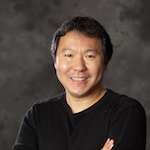
Shanghua Teng

Shanghua Teng

Dr. Shang-Hua Teng has twice won the prestigious Gödel Prize in theoretical computer science, first in 2008, for developing the theory of smoothed analysis , and then in 2015, for designing the groundbreaking nearly-linear time Laplacian solver for network systems. Both are joint work with Dan Spielman of Yale --- his long-time collaborator. Smoothed analysis is fundamental for modeling and analyzing practical algorithms, and the Laplacian paradigm has since led to several breakthroughs in network analysis, matrix computation, and optimization.

Citing him as, "one of the most original theoretical computer scientists in the world", the Simons Foundation named Teng a 2014 Simons Investigator, for pursuing long-term curiosity-driven fundamental research. He and his collaborators also received the best paper award at ACM Symposium on Theory of Computing (STOC) for what's considered to be the ``first improvement in 10 years'' of a fundamental optimization problem --- the computation of maximum flows and minimum cuts in a network. In addition, he is known for his joint work with Xi Chen and Xiaotie Deng that characterized the complexity for computing an approximate Nash equilibrium in game theory, and his joint papers on market equilibria in computational economics